
The Southern California New Construction Home Financing Playbook
A deep dive into mortgage rate buydowns, down payment efficiency, and new home builder incentive structures in Southern California.
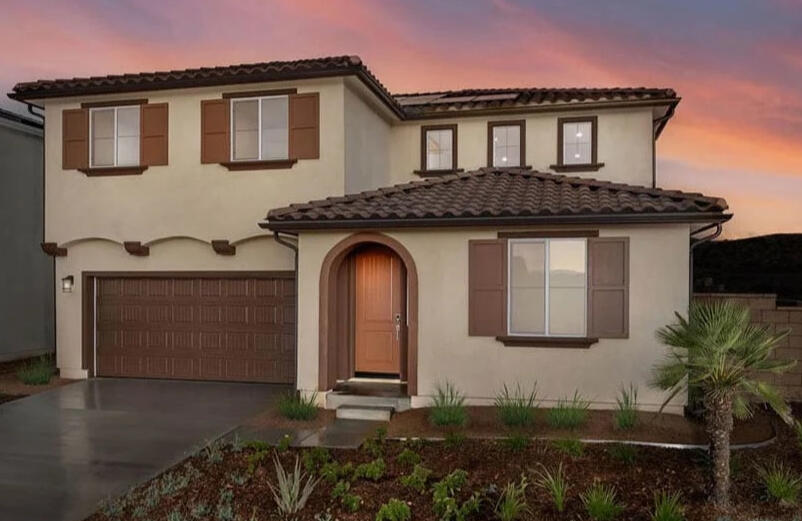
The Invisible Financial Landscape of New Builds
When purchasing a new construction home in Southern California, most buyers fall into the trap of “Sticker Price Obsession.” They walk into a model home, see a price tag, and assume the only way to “win” the negotiation is to lower that number. However, the internal financial structure of corporate builders means that a price reduction is often the least effective way to save money.
As an independent advocate, I help my clients look past the visible price to analyze the Total Cost of Ownership. In this market, a smart buyer doesn’t just chase lower prices; they structure smarter deals that prioritize monthly cash flow and long-term liquidity. This guide breaks down the technical math of rate buydowns, the opportunity cost of large down payments, and the reality of builder-backed financing.
Watch: How to Save $1,000/Month on Your New Home
The “Price Cut” Trap vs. The Rate Buydown
Consider a typical scenario: A builder offers a $15,000 incentive. A standard buyer immediately pushes for a $15,000 price reduction. On a $700,000 home with 5% down, that price cut drops the monthly principal and interest payment by roughly $97. While that feels like a win, it is technically an inefficient use of the builder’s capital.
Now, consider applying that same $15,000 toward a Mortgage Rate Buydown. By using those funds to buy “points” or leverage a builder’s Forward Commitment, that same credit could drop the interest rate by 0.50% or more. This shift moves the monthly savings from $97 to over $230. Over the first five years of ownership, the rate buydown puts nearly $14,000 back into the homeowner’s pocket—all while requiring less cash at the closing table.
The 20% Down Payment Myth
There is a persistent belief that a 20% down payment is the “magic number” for financial responsibility. However, in a high-growth region like Southern California, tying up significant liquidity in a 30-year asset can be a costly mistake. For a $700,000 home, the difference between 5% down ($35,000) and 20% down ($140,000) is a massive $105,000 in upfront cash.
While 20% down lowers the monthly payment, the Break-Even Point—the time it takes for those monthly savings to equal the extra $105,000 you paid upfront—is often over 12 years. If you do not plan to hold that specific mortgage for over a decade, putting 20% down can actually cost you liquidity and financial flexibility. Keeping that $100,000 liquid allows you to furnish the home, establish an emergency fund, or invest in higher-yield opportunities.
Understanding Builder Forward Commitments
Builders like Lennar, Toll Brothers, and Tri Pointe Homes often offer “flashy” interest rates that are well below the market average. It is essential to understand that these are not just marketing fluff; they are Forward Commitments. The builder has pre-purchased a block of money at a specific rate to move inventory.
These incentives almost always require using the builder’s affiliated lender. While this is not inherently negative, these deals often have “strings attached,” such as specific credit score minimums or down payment thresholds. Our role is to compare these in-house offers against independent market rates to ensure the builder’s “deal” isn’t being offset by higher origination fees or insurance premiums.
The Art of New Construction Negotiation
Negotiating with a corporate builder is vastly different from a resale transaction. Builders care about their “Comps”—they cannot drop the recorded sales price significantly without devaluing the rest of their development. This is why leverage is found in “Back-End Value.”
Leverage increases on Quick Move-In homes that are already complete and sitting on the books. In these cases, we can often negotiate for “Stacked Incentives”—combining a rate buydown with credits for design center upgrades or even non-monetary perks like appliances or backyard landscaping. Success in this area requires a specialist who understands the builder’s internal approval layers and quarterly inventory goals.
Expert Advocacy at No Cost
A builder’s sales representative is a corporate employee whose fiduciary duty is to the builder’s profitability. To ensure you have an independent specialist auditing these technical financing options and protecting your monthly budget, I must accompany you on your very first visit to the community. Because the builder pays my commission, you receive this full level of technical negotiation and coordination at no cost to you.